Go Beyond ROI
Make Decisions and Execute with Return on Change (ROC)
Most initiatives fail because they are designed to achieve the wrong thing via ROI. Our unique approach to ROC is how we help CFOs and the vendors who serve them eliminate wasted resources on initiatives that don't deliver.
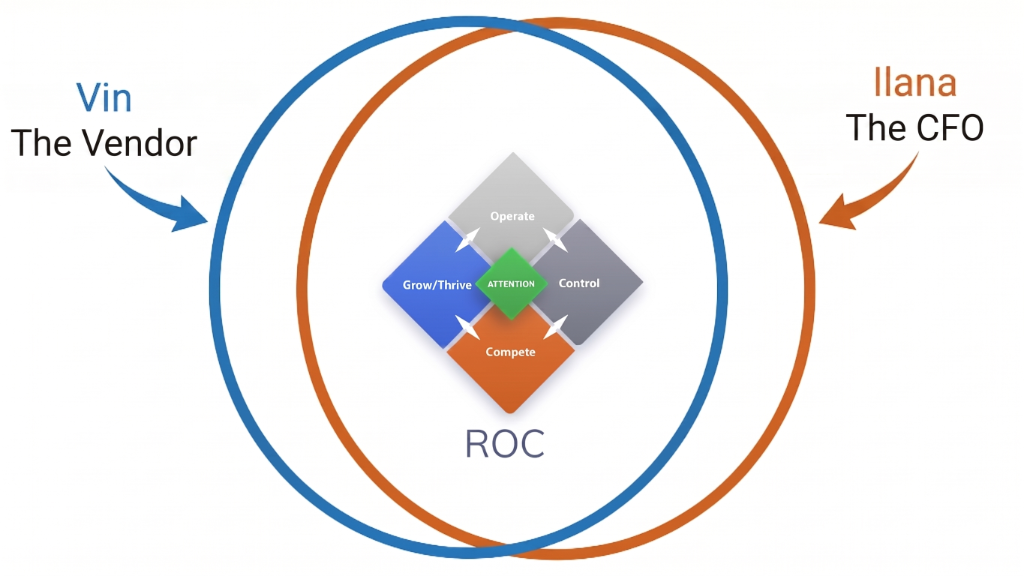
We help both CFO and vendor use the Value Diamond© model to measure and achieve results using the simple value driver of a shift in Human Attention.
(hover over the graphics below to learn more)
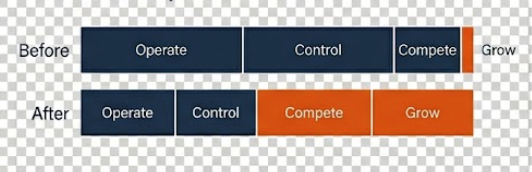
Operate
The day-to-day machinery that keeps the business running: close, reporting, transactions, service delivery, the recurring work that has to happen for the lights to stay on. Necessary, visible, and never finished.
In Return on Change, Operate absorbs the most attention by default because it is urgent and measurable. Activity here is easy to mistake for progress. ROC asks how much of this work can be removed, automated, or simplified so attention is freed for higher-return quadrants.
Control
The work that protects the organization: risk, compliance, governance, controls, and accountability. It exists to keep the enterprise safe, trusted, and within the lines.
In Return on Change, Control is essential but expands quietly until it becomes friction. Every new control is also a tax on speed and decision latency. ROC treats over-control as a real cost and looks for where protection has crossed into drag.
Compete
The work that builds durable advantage: positioning, pricing power, capability, and the ability to win against real alternatives. This is where the organization decides how it wins, not just whether it runs.
In Return on Change, Compete is chronically underfunded attention. Most teams treat it as a someday activity and let Operate and Control crowd it out. Moving attention here is where transformation investment starts to produce strategic return rather than motion.
Grow/Thrive
The work that creates the future: new markets, new offerings, new revenue, and the bets that change the size and shape of the organization. This is where strategy actually lives.
In Return on Change, Grow is the highest-return quadrant and the one starved of attention first. It rarely shouts, so it loses to whatever is louder. Shifting attention toward Grow is the central move ROC is built to make visible and deliberate.
Attention
The value the CFO delivers to their organization is based exclusively on what their teams give their attention to. CFOs cannot be strategic if their teams are stuck in Control and Operate work instead of Compete and Grow.
Help You Recognize the Limitations of ROI and How to Use ROC Instead
In every organization we work with, for profit and not for profit, we see the same four patterns that derail efforts to enhance performance. Look below to see if those patterns apply to you.

Lengthy Evaluations that End in No Decision
Time and money wasted in a never ending evaluation cycle that often ends in No Decision. Your problems persist.
Resources spent. No deal closed.
Tech Investments Approved Without Change Management
Technology is purchased, work and activity doesn't change. Value not achieved. Problems persist.
Adoption stalls and future revenue falls into a crater.

Debate Solutions Before Assessing the Problem
Decisions get made on incomplete information, which leads to the wrong choice. Original problems persist. More problems added.
The entire revenue cycle suffers from a flawed business case built on weak ROI.

Day Job Activity Creates Exhaustion
Your teams are too busy to think or act. Nothing gets done and problems compound.
Prospects are too overwhelmed to engage, let alone buy or implement. New customer acquisition and growth stall.
Three Reasons to Engage Us
No Decision
60%
Most solution evaluations end without a decision. CFOs lose time and money while the original problems persist. Vendors lose the deal after months of effort.
Source: Gartner
Wrong Solution
50%
Half of buyers report they purchased the wrong solution. The most common reason is a weak problem assessment up front. CFOs are stuck with technology that doesn't fit. Vendors inherit unhappy customers and risk downstream revenue acquisition.
Source: Gap Selling
Project Failure
71%
More than seven in ten technology and transformation projects fail. CFOs are left with shelf-ware and the problems the project was meant to solve. Vendors are left with customers who won't expand or renew.
Source: Mckinsey & Company
Three Ways to Engage Us
Speaking
Keynotes, breakouts, and workshops for organizations and conferences. We deliver sessions at internal leadership events, professional conferences, software user conferences, and vendor kickoffs.
Advisory
Hands-on guidance using the ROC model. We work with CFOs in for-profit and nonprofit organizations, and with SaaS vendors building buyer enablement into their go-to-market strategy.
Enablement
Execution support, not just guidance. We help the Office of the CFO put operating strategies into practice, and we build buyer enablement capability into SaaS vendor teams.
Our approach is driven by the simple fact that the value the CFO delivers to their organization is based exclusively on what their teams do or do not do with their time.
Shifting attention is what drives better and lasting results.
CFOs Who Are Tired of Shelf-Ware and Stagnant Performance
Executive teams funding large-scale change
You're investing in transformation but outcomes fall short of the business case. The ROI projections don't materialize because the work your teams do every day hasn't actually changed.
Leaders stuck in slow, politically complex decisions
Evaluations drag on, consensus is elusive, and by the time a decision is made, the window has closed or the problem has gotten worse.
Vendors and consultants selling transformation into misaligned buyers
The technology gets implemented but adoption stalls. The behaviors that would actually deliver value never take hold.
Vendors Who Want More Predictable Growth
Acquire New Customers
- • Shorter sales cycles
- • Higher win rates
- • Faster time to revenue
Expand Existing Customers
- • Higher adoption rates
- • Faster expansion into new use cases
- • Stronger customer success
Retain Current Customers
- • Higher renewal rates
- • Higher customer satisfaction
- • More word-of-mouth referrals
Signals That Reveal Your Execution Gaps
For the CFO
Signals That Reveal Your Execution Gaps
Attention Shift
Whether time, energy and decisions where shifted towards stated transformation priorities.
Meeting Load Reduction
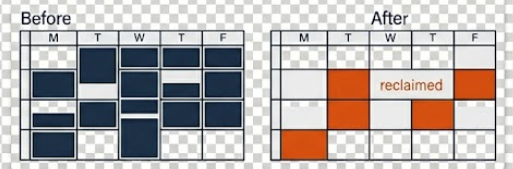
Whether low-value meetings declined and that time was reclaimed for higher-value work.
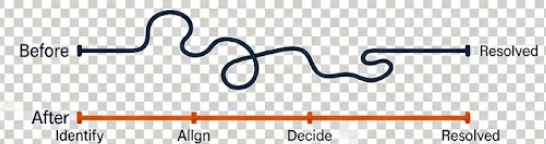
Decision-Cycle Speed
Whether key decisions move faster from recognition to resolution, without disappearing into governance loops.
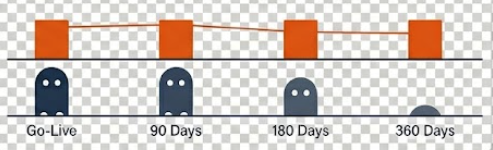
Adoption Durability
Whether the behavior change still exists 90, 180, and 360 days after go-live.

Internal Capability Transfer
Whether the organization can continue using the method without depending on outside support.
For the Vendor
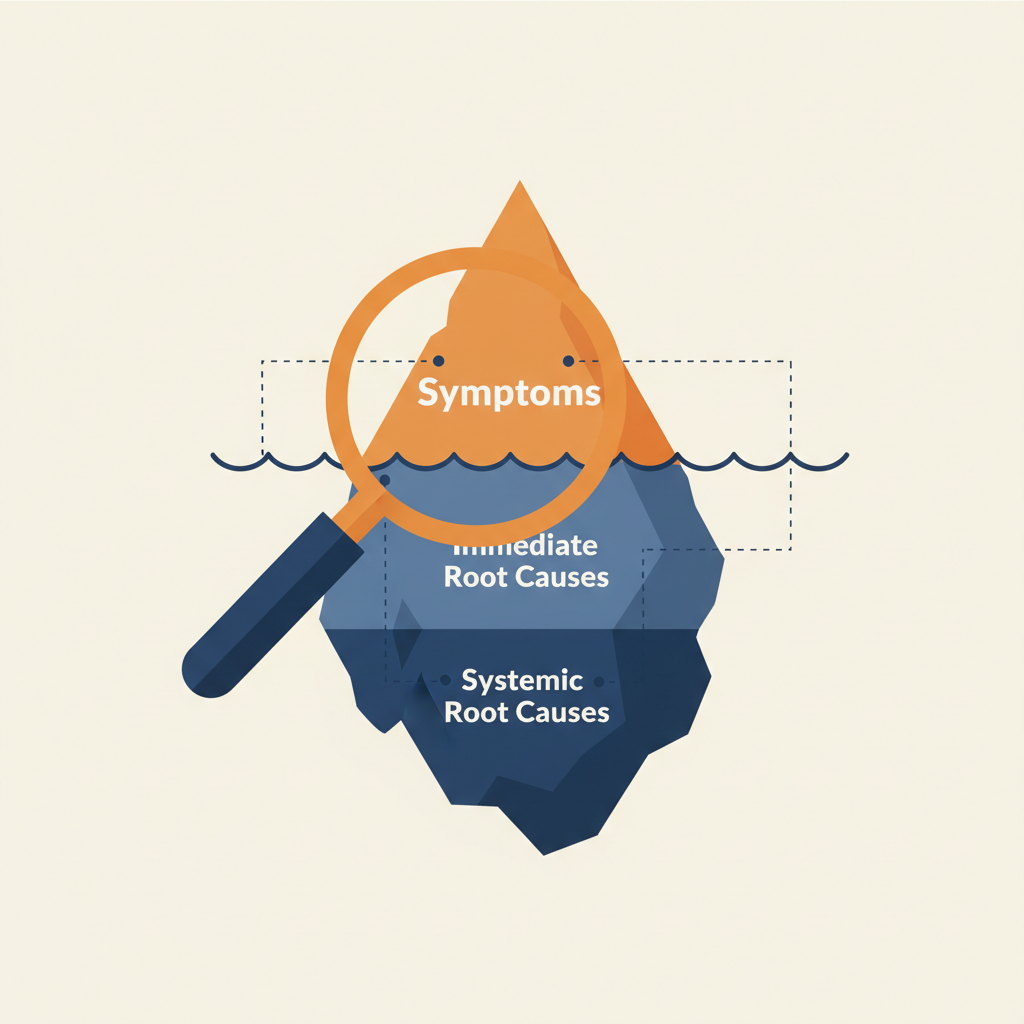
Ability to Assess the Problem
Do you rely on traditional discovery or do you do more to help people see the problem more completely?
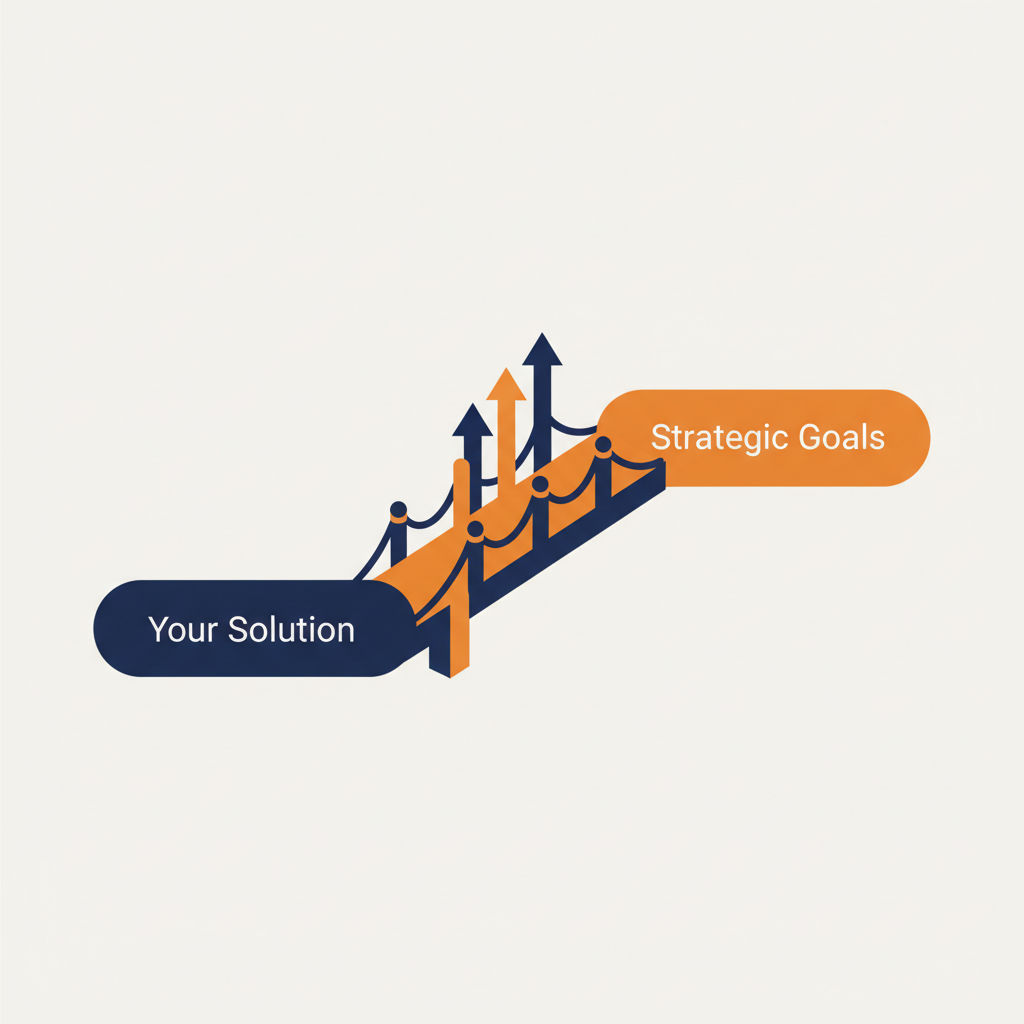
Link to Strategic Priorities
How do you help people see the link between your solution and their strategic priorities?
Build Buyer Confidence
Are you doing enough to give people confidence in themselves to achieve value from your solutions?
Diagnostics that Expose the Problem Fast
For the CFO
The Attention Audit
Where is your leadership attention actually going?
Most transformations fail because leadership attention is concentrated in the wrong places. Effort is rarely the issue. This diagnostic shows how your organization is distributing energy across Operate, Control, Compete, and Grow.
Cost of Delay Check
What is slow decision-making actually costing you?
Most organizations fail because decisions take too long, do not stick, or never translate into changed behavior. This diagnostic shows how much friction is built into your decision system and what it is costing you.
For the Vendor
Buyer Enablement Health Check
Where is your buyer losing momentum?
Sales cycles stall when buyers lack the information, confidence, or organizational alignment needed to move forward. This diagnostic reveals critical gaps in your buyer enablement strategy and decision support.
Deal Push Assessment
Where do your deals actually die?
Most deals are not lost to a competitor. They stall because the buyer cannot build internal consensus, cannot quantify the cost of inaction, or cannot get the decision past the people who were never in your meetings. This diagnostic shows you where in the buying journey your deals are quietly dying and what is causing it.
Start With The Sharpest Entry Points
For the CFO
The Attention Audit Guide
A practical guide to help identify where attention is concentrated, what work starves your organization, and where capacity must shift.
- Attention mapping framework
- 8 diagnostic prompts
- How to interpret the result
For the Vendor
Buyer Decision Enablement Checklist
A practical checklist to help you build buyer enablement into your go-to-customer motion. Use it to identify opportunities to better enable people to buy.
- Key buyer decision criteria
- Content and tools assessment
- Sales enablement roadmap
Available for Sale Now
CFOs approve transformations that fail to deliver. Vendors sell solutions that fail to land. The ROI Lie is about the broken measurement system underneath both problems and what to do about it.
The ROI Lie launches September 1, 2026. Be the first to know when copies are available, and get early access to the launch resources we are building around it.
The ROC Intersection Between CFO and Vendor
Vin

Vin spent more than 25 years selling enterprise applications into the Office of the CFO. He has been on the vendor side of every dynamic this work is designed to fix: the stalled evaluation, the wrong-fit deal, the implementation that never landed. He now helps SaaS vendors build the buyer enablement most go-to-market motions are missing.
Ilana

Ilana has spent more than 25 years as a CFO and finance operator building strategic finance functions inside complex, mission-driven organizations. She has approved the transformation investments, owned the results, and seen up close why most of them fail to deliver. She now helps CFOs design the operating conditions that turn investment into actual change.
Four Principles That Shape Every Engagement
Measure change, not just spend
We track whether behavior actually shifted, not just whether the budget cleared.
Force the decisions that are being avoided
Most transformations stall at decisions leadership keeps deferring. We surface them and make them ownable.
Build internal capability, not dependency
We transfer the method to your team so the change holds after we leave.
Work both sides of the transformation table
We bring the CFO and the vendor perspective into the same room because that is where deals and outcomes actually move.
Measure change, not just spend
We track whether behavior actually shifted, not just whether the budget cleared.
Force the decisions that are being avoided
Most transformations stall at decisions leadership keeps deferring. We surface them and make them ownable.
Build internal capability, not dependency
We transfer the method to your team so the change holds after we leave.
Work both sides of the transformation table
We bring the CFO and the vendor perspective into the same room because that is where deals and outcomes actually move.
Insights & Resources
Practical guidance, video insights, podcasts, and newsletters on leading transformation and making change stick
Substack Newsletters
The Strategic CFO
For senior finance leaders who are tired of delivering reports instead of results. Return on Change is not a transformation methodology; it is an operating system for how the Office of the CFO allocates attention, governs decisions, and measures what actually matters. Written by a CFO, for CFOs who are done managing motion and ready to drive momentum.
The Beyond ROI Guy
ROI is a terrible metric to navigate decisions to invest in technology and transformation initiatives. Subscribers to my newsletter will get the insights and ideas that validate the assertion and demonstrate ROC as a better metric to drive actual success. Written by an enterprise software seller with over 25 years of watching people make bad buying decisions.
Podcast Episodes
Next Step
If this already feels familiar, the next step is a Conversation
Initial Offer - CFO
The ROC Reset
Includes
- Attention allocation diagnostic
- Decision bottleneck mapping
- Governance gap identification
- Tradeoffs leadership is avoiding
- Reset plan with committed decisions
- Clear ownership for what happens next
Initial Offer - Vendor
Buyer Decision Enablement Assessment
Includes
- Content Audit for Buyer Decision Enablement
- Buyer Confidence Assessment
- Strategic Value Assessment
- Decision-Support Material Audit
- Buyer Conversation Review